When two vehicles collide at highway speeds on the 805, the physical debris tells one story, but the electronic data hidden inside the vehicle’s control modules tells the truth.
Modern vehicles are effectively computers on wheels. While drivers argue over who merged unsafely or who braked suddenly near the Mission Valley viaduct, the Event Data Recorder (EDR) has likely already logged the objective reality. It captures vehicle speed, throttle position, brake application, and steering angles in the milliseconds before impact. This data exists independently of memory, trauma, or bias.
The problem is that this data is volatile, and the vehicle containing it is likely already out of your possession.
Insurance companies move quickly to total vehicles. Tow yards in San Diego are businesses built on turnover; they are legally permitted to dispose of unclaimed wreckage relatively quickly to clear space. Sometimes, the black box is crushed or wiped before a plaintiff realizes it holds the key to their case.
To secure this evidence, we must immediately issue a formal preservation letter to all parties holding the vehicle. If necessary, we file for a temporary restraining order (TRO) to prevent the destruction of the car until the data can be extracted by a forensic specialist.
Key Takeaways for Preserving Black Box Data
- Act immediately to preserve the vehicle's black box data. This electronic evidence is volatile and can be destroyed within weeks when a car is sent to a tow yard or salvage pool.
- EDR data provides objective proof of liability. It records data points like speed, braking, and steering angles that can refute the other driver's story and prove fault.
- A formal legal notice is required to prevent evidence destruction. We send a spoliation letter to legally obligate the insurance company and tow yard to preserve the vehicle until the data is extracted.
The Silent Witness in Your Dashboard: What EDRs Actually Record
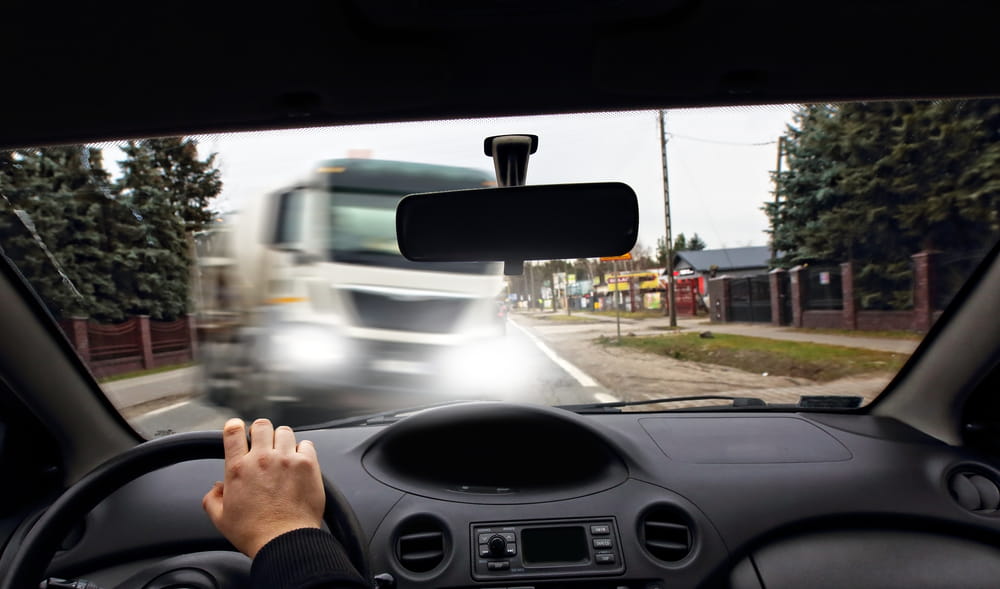
After a crash on a high-speed corridor like Interstate 805, determining liability frequently devolves into a he-said-she-said argument. Witnesses traveling at 70+ mph are rarely reliable, and skid marks on concrete fade or can be misinterpreted by police on the scene.
Without objective data, a victim might be unfairly assigned partial fault. In legal terms, this is comparative negligence. On the 805, where traffic notoriously slows from 70 to 0 instantly, proving you were stopped before you were hit might sometimes be the difference between a fair settlement and a denial. If the other driver claims you cut them off, your word alone may not be enough to secure full compensation.
The solution lies in the EDR. Under federal regulations, specifically 49 CFR Part 563, most modern vehicles record specific data points during a crash event. These include:
- Vehicle Speed: This proves if the defendant was doing 85 mph in a 65 mph zone, shattering their argument that they were driving with the flow of traffic.
- Engine Throttle Percentage: This indicates intent. Did they try to accelerate through a closing gap?
- Brake Application: Did they brake 2 seconds before impact, or 0.1 seconds? This is the clearest indicator of inattention or distraction.
- Delta-V (Change in Velocity): This measures the severity of the impact. It correlates directly to the potential for injury. Insurance companies sometimes look at minor bumper damage and argue that you could not have been hurt. A high Delta-V reading proves that the force transferred to your body was significant, regardless of how the bumper looks.
- Seatbelt Status: The defense will check this immediately to argue against injury claims, but it also serves to prove you were compliant with the law.
This applies specifically to common San Diego driving behaviors. We see frequent rear-end collisions near the I-8/I-805 interchange where lanes merge and diverge rapidly. Proving that the defendant never touched their brakes because they were looking at their phone changes the entire direction of a claim.
Why the Race Against Time is Real: The Logistics of Data Loss
The most dangerous time for your case evidence is the first 14 days after the crash, while the car sits in a storage lot. During this time, you are likely recovering from injuries, managing doctor's appointments, and dealing with the shock of the wreck. Meanwhile, the clock on your evidence is ticking.
The Tow Yard Clock
San Diego tow yards charge high daily storage fees. They are not in the business of long-term vehicle preservation. Under the California Civil Code Section 3068.1, tow yards have a lien on the vehicle for towing and storage. If these fees are not paid, or if the insurance company deems the car a total loss, the yard wants the car moved to a salvage pool immediately.
Once a vehicle arrives at a salvage pool (like Copart or IAA), it is prepped for auction or crushing. This process moves fast. In some cases, vehicles are stripped or crushed within weeks of the accident.
Power and Battery Drain
While EDR data is generally non-volatile (meaning it stays written on the chip even without power), some systems require power to maintain certain diagnostic logs that provide context to the crash. In a severe wreck, the battery is commonly smashed or disconnected.
Even if the battery survives, it drains while the car sits in the lot. If the power dies completely, accessing the data becomes significantly more expensive. Instead of a simple download via the OBDII port (the plug under the steering wheel), our forensic specialists must remove the airbag control module and perform a benchtop extraction. This increases costs and gives the defense more room to argue that the data was tampered with during removal.
The Total Loss Trap
When an insurer declares your car a total loss, they send documents asking you to sign over the title so they can pay you the cash value of the car. This seems standard, but there is a catch.
Once you sign over the title, the insurance company owns the car. They own the black box. They own the evidence.
At that point, they may legally destroy it unless a preservation notice has been served. If the data on that recorder proves the other driver was 100% at fault, the insurance company has no incentive to keep it safe. Furthermore, if we need data from the other driver's car to prove they were speeding, we have no right to touch it without a legal order or a letter of spoliation warning them of consequences.
This is why waiting to hire counsel until after you feel better is a strategic error. Our first job is stopping the clock on evidence destruction.
The Legal Mechanism: How We Lock Down the Evidence

We do not rely on the goodwill of insurance carriers to keep evidence safe. We use specific legal mechanisms to compel them to do so.
The Spoliation Letter
Spoliation of evidence is a legal concept referring to the destruction or significant alteration of evidence. Immediately upon taking a case, we send a certified preservation letter to the insurance company, the tow yard, and the defendant driver.
This letter puts them on formal notice that a claim is pending and the vehicle is material evidence. It explicitly forbids them from altering, selling, or destroying the vehicle.
If they destroy the car after receiving this letter, we may petition the court for sanctions. California courts may instruct the jury to make an adverse inference. This means the jury is told to assume that the missing evidence would have hurt the defendant's case. This is a powerful deterrent that usually forces insurance companies to comply.
Chain of Custody
A family member cannot simply drive to the tow yard and demand to download the data. For EDR data to be admissible in court, the chain of custody must be unbroken.
We ensure that only certified forensic specialists handle the data extraction. They document who touched the vehicle, when the data was accessed, and what equipment was used. This prevents the defense from arguing that the data was corrupted or manipulated after the crash.
Temporary Restraining Orders (TRO)
In severe injury cases, or cases involving commercial trucking on the 805, the opposing party may attempt to move the vehicle out of state or refuse access. When this happens, we file for a Temporary Restraining Order (TRO) in court. This is a judicial order that freezes the status of the vehicle, legally barring anyone from moving or altering it until our specialists have completed their inspection.
Addressing Privacy
We also manage the privacy objections that insurers frequently raise. While the California Consumer Privacy Act (CCPA) protects consumer data, vehicle crash data in a litigation context is different. Insurers sometimes hide behind privacy laws to block access to the defendant's black box. We understand the legal nuance required to compel the production of this data through the discovery process, overriding these generic objections.
FAQ for Preserving Black Box Data
Does every car have a black box?
Most passenger vehicles manufactured after 2014 have EDRs due to federal regulations (49 CFR 563). Many manufacturers, including GM and Ford, have included them voluntarily since the mid-1990s. If you are hit by a commercial truck, they almost certainly have an even more advanced Electronic Control Module (ECM).
Can I access the black box data from the app on my phone?
No. While modern apps show GPS location or driving scores, the forensic EDR data required for court is stored locally in the vehicle's airbag control module. It requires physical extraction using proprietary hardware and software.
What if the car was already crushed by the tow yard?
We may still have a case based on spoliation of evidence. If we can prove the insurance company or defendant knew a claim was likely and allowed the evidence to be destroyed anyway, we may ask the court to penalize them for that destruction.
Does this apply to Uber/Lyft accidents on the 805?
Yes. Rideshare accidents usually involve two layers of data: the vehicle’s EDR and the telematics data monitored by the rideshare company (Uber/Lyft). We frequently subpoena the telematics data to see app usage and driving patterns leading up to the crash.
Can the insurance company use my black box data against me?
Yes, if they have access to the vehicle. If the data shows you were speeding or not wearing a seatbelt, they will use it to reduce their payout. This is why having counsel manage the release of information is the best way to protect your interests.
Secure the Truth Before It’s Erased
The insurance company is already evaluating the data from this wreck; you cannot afford to let them hold all the cards.
Waiting for the police report is usually waiting too long. You may think the car is safe because it is in a storage lot, but storage lots are businesses built on turnover. We step in to ensure that evidence is preserved, extracted, and analyzed to build an irrefutable timeline of the crash.
If you have questions about a crash on the 805 or suspect the other driver is lying about what happened, call us at 858-529-5872. We will tell you immediately if the evidence supports a claim and send the necessary preservation demands to lock down the data before it disappears.

Ashley Rae Rawlins
Founder and CEO - Rawlins Law Accident & Injury Attorneys
Personal Injury Attorney
Author's Bio