The insurance behind an Uber or Lyft crash can swing from a state-minimum policy to $1 million based on what the driver's app was doing at the moment of impact. That one fact decides what a claim is worth, and it is the first thing we pin down.
Rawlins Law Accident & Injury Attorneys represents passengers, pedestrians, and other drivers hurt in Uber and Lyft crashes across Orange County, from the theme park corridor in Anaheim to John Wayne Airport and the commuter routes through Santa Ana. A rideshare accident lawyer Orange County residents and visitors call is usually working out which policy applies before anything else. Call 858-529-5872 for a free case review.
Experience the Ashley Advantage
Contact Us 24/7 for a Free Case Evaluation
Table of contents
- Does a Rideshare Crash Follow Ordinary Car Accident Rules?
- Tourism and Commuter Traffic Create Two Different Crash Patterns
- How Does Rideshare Insurance Work, Trip by Trip?
- What Changed for Passengers Hit by an Uninsured Driver?
- Passengers and Pedestrians Both Face Real Risk
- When the Injuries Are Serious
- How Long Do You Have to File an Orange County Rideshare Claim?
- Rawlins Law's Approach to Orange County Rideshare Cases
- FAQs: Rideshare Accident Lawyer Orange County
- Talk to Our Orange County Rideshare Accident Team
Does a Rideshare Crash Follow Ordinary Car Accident Rules?
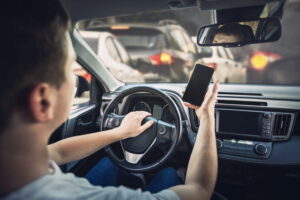
Yes, on liability. The presence of an app does not change the underlying legal question of who was negligent and what that negligence caused. An Orange County car accident attorney handling a rideshare case still has to establish fault, document the injury, and calculate what it costs the injured person.
What differs is the insurance sitting behind the at-fault driver, since a driver actively working a trip carries commercial-grade coverage that dwarfs a personal auto policy. Someone has to pin down exactly what the driver was doing on the app when the crash happened, because that single detail determines which policy funds the claim.
California's comparative negligence rule applies the same way it would in any other crash here, meaning a recovery is reduced by the share of fault assigned to you rather than eliminated. A passenger who was not wearing a seatbelt, or a pedestrian who crossed against a signal, can still recover. What changes is only the size of the insurance pool available once fault is sorted out.
Tourism and Commuter Traffic Create Two Different Crash Patterns
Anaheim's theme park corridor produces a specific kind of collision. Drivers circling Harbor Boulevard and the streets around the Disneyland Resort, hunting for a pickup curb among dense pedestrian crowds, create conditions where distracted driving and sudden stops happen constantly. Visitors crossing mid-block toward a waiting vehicle add another layer, since they do not read local traffic patterns the way a resident would.
Irvine and Santa Ana produce a different pattern entirely. John Wayne Airport generates a steady flow of travelers requesting rides at all hours, and Irvine's tech corridor adds commuter demand for short trips between office parks. Santa Ana's denser residential streets see more everyday use, so a driver there is often navigating unfamiliar blocks rather than a predictable commercial strip.
Which setting a crash happened in shapes how we investigate it. Toll roads add a wrinkle unique to the county. Drivers on the 73 or 133 sometimes make abrupt lane changes to reach a transponder lane, and a rideshare driver unfamiliar with the local toll system can trigger that at highway speed.
How Does Rideshare Insurance Work, Trip by Trip?
California splits every rideshare trip into periods, and Public Utilities Code Section 5433 sets what has to be in place for each one. The coverage that responds depends entirely on which period the driver was in at the moment of the crash:
- App off. Only the driver's personal auto policy applies, typically the state minimum.
- Logged in and waiting for a match. The statute requires coverage of at least $50,000 per person, $100,000 per incident, and $30,000 in property damage.
- Trip accepted, whether en route to the pickup or with a passenger aboard. The company's full commercial liability policy applies, $1 million for death, personal injury, and property damage caused by the driver.
That $1 million figure is third-party liability, so it reaches anyone the driver injures: a passenger, a pedestrian, or another motorist.
The gap between $50,000 and $1 million is why the accepted-trip question decides these cases. It matters most around Disneyland, where a driver might circle the block for minutes hunting an exact pickup spot before a passenger ever gets in. Confirming when the trip was accepted often becomes the central question.
Transition points generate the most disputes. A driver who just dropped a family at a hotel and immediately causes a crash while still logged in but not yet matched sits in the lower-coverage window, which surprises almost everyone. Insurers on opposing sides frequently disagree about which period applied when the gap between events is seconds rather than minutes.
If you are being told a lower policy applies to your crash, call 858-529-5872 before you accept that.
What Changed for Passengers Hit by an Uninsured Driver?
The protection that covers this exact situation was cut sharply. Senate Bill 371, effective January 1, 2026, left the $1 million at-fault liability coverage intact but reduced the uninsured and underinsured motorist coverage that protects a rideshare passenger when a different driver, one who is uninsured or carries too little insurance, causes the crash.
That coverage dropped from $1 million to $60,000 per person and $300,000 per incident. Read the scope carefully: under Section 5433 this protection runs from the moment a passenger enters the vehicle until the passenger exits it, so it is passenger coverage rather than coverage for anyone the vehicle strikes.
The reduced pool has to stretch across every injured passenger when more than one person was riding together. Passengers who carry their own auto insurance, including a non-owner policy, sometimes have separate uninsured motorist protection that stacks on top of the rideshare coverage. Checking that policy has become a far more important early step.
Passengers and Pedestrians Both Face Real Risk
Passengers inside the vehicle are not the only people who get hurt. Pedestrians struck by Uber and Lyft vehicles in OC make up a significant share of these claims, particularly around theme park entrances, hotel drop-off zones, and airport curbs. A pedestrian hit by a driver working an accepted trip reaches the same $1 million liability policy a passenger would.
Cyclists using Orange County's coastal and urban bike lanes face a related risk. A rideshare vehicle stopped in a bike lane to load luggage or passengers forces cyclists out into moving traffic, and when that improvised detour leads to a collision, the vehicle's positioning becomes part of the investigation.
Other drivers face the same exposure to a rideshare driver's distraction. Someone checking a passenger's rating, glancing at a navigation prompt, or scanning a crowd can drift out of a lane or brake suddenly. Confirming the at-fault driver was working an accepted trip can unlock policy limits far beyond a standard auto claim.
When the Injuries Are Serious
Some rideshare crashes produce claims that run for years rather than months. An Orange County personal injury attorney handling one has to look past the bills already on file and account for future treatment, reduced earning capacity, and non-economic loss that a first offer seldom reflects. Traumatic brain injury claims sit in this category, as do claims involving permanent limits on the ability to work.
With several policies potentially in play, sorting out which one pays and how much is actually available takes real investigation. Life care planning matters here, meaning a qualified planner puts a documented number on decades of future cost rather than leaving it to an estimate. Settling before that evidence exists tends to lock in a figure far below what the claim is worth.
Non-economic loss warrants the same attention, particularly for passengers who become anxious about riding in vehicles after a serious crash, or pedestrians who grow hesitant crossing streets where pickups and drop-offs happen constantly. These losses are compensable under California law, and they are proven through records rather than assumed.
How Long Do You Have to File an Orange County Rideshare Claim?
Two years from the date of the crash, under California Code of Civil Procedure Section 335.1. A claim against a government entity, such as a dangerous roadway condition maintained by a city, runs on a far shorter track and generally requires a formal claim within six months under Government Code Section 911.2.
Rideshare claims carry a second clock unrelated to the filing deadline. Trip logs, login timestamps, and in-app communications sit on a company server and become harder to obtain the longer a claim sits without a formal preservation request. That request should go out in weeks, not months.
Rawlins Law's Approach to Orange County Rideshare Cases
Ashley Rawlins, also known as Car Crash Ash, built Rawlins Law around reviewing every case individually, which suits rideshare claims where the applicable insurance can shift substantially on facts that are not obvious at first glance. We are a female-owned firm, we stay personally involved from intake through resolution, and we take on cases other offices decline over disputed coverage periods or unclear fault.
Our Orange office at 1100 West Town & Country Road, Suite 1250, serves people hurt in rideshare crashes throughout Anaheim, Irvine, Santa Ana, and the surrounding communities. We negotiate professionally with every insurer involved, and we prepare each claim as though it may need to be tried. The first thing we do on a rideshare file is request the trip data, because that record decides the coverage question and it does not sit on a server forever.
We apply no minimum case value, so a claim another office turned down still gets a real review here. You will hear an honest read on which policy applies and what that means for your claim. Call 858-529-5872 for a free case review.
FAQs: Rideshare Accident Lawyer Orange County
These are the questions Orange County riders and pedestrians ask most often after a rideshare crash.
My Uber got hit while circling for a pickup spot near Disneyland. What coverage applies?
If the driver had accepted the ride and was navigating to the confirmed pickup location, the $1 million commercial policy typically applies rather than the more limited waiting-period coverage. The app record settles it, which is why we request that data early.
What if a different driver hit our Lyft near John Wayne Airport and had no insurance?
An Uber accident lawyer Orange County residents contact would look first to the $60,000 per person uninsured motorist coverage under SB 371, then to coverage on your own auto policy. A non-owner policy counts here, and many passengers do not realize theirs may stack.
I was a tourist visiting from out of state. Can I still bring a claim here?
Yes. California law governs a crash that happens within the state regardless of where the injured person lives, and out-of-state visitors have the same rights as California residents. Going home does not close the claim, and we can handle it without you flying back.
Does it matter that the crash happened in a theme park parking structure rather than a public street?
Generally not for rideshare coverage purposes, since the coverage follows the driver's app status rather than the type of road. Private property does raise separate questions about the property owner's own responsibility, and a poorly marked structure or a blind corner can put the owner into the claim alongside the driver.
How does a Lyft accident attorney Orange County CA firm access trip data from the rideshare company?
Through formal legal requests and, where necessary, litigation discovery, which can compel Uber or Lyft to produce login timestamps and location data for the trip. A preservation letter sent early is what keeps that record available long enough to request it, so this is one of the first things we send.
I was a pedestrian and the driver says I stepped out from between parked cars. Do I still have a case?
Possibly. California's comparative negligence rule allows recovery even where fault is shared, reduced by the percentage assigned to you rather than eliminated entirely. A driver's version of events is not the final word on fault, and curb layout, lighting, and witness accounts often tell a different story.
Is there a cost to speak with Rawlins Law about a rideshare accident case?
No. Consultations are free, and we work on contingency, which means our fee is a percentage of what we recover and comes out of that recovery rather than out of your pocket. If we recover nothing on your behalf, you owe us no attorney fee.
Talk to Our Orange County Rideshare Accident Team

A rideshare crash brings insurance questions an ordinary car accident never involves, and the recent cut to passenger uninsured motorist coverage makes a clear answer more valuable than it was. A rideshare crash lawyer OC families turn to reviews every claim individually, requests trip data before it disappears, and stays personally involved from your first call through resolution. There is no charge to find out where you stand.
Call 858-529-5872 or visit our office at 1100 West Town & Country Road, Suite 1250, for a free case review. We will tell you which policy applies and whether the claim is worth bringing.


