A left-turn motorcycle accident in California is one of the most dangerous situations a rider can face on the road. A car pulls across your lane, you have a fraction of a second to react, and the driver later tells the officer, "I didn't see him."
According to the National Highway Traffic Safety Administration (NHTSA), roughly 42% of fatal motorcycle crashes involving another vehicle happen when that vehicle turns left while the rider is traveling straight. That single statistic tells a powerful story: left-turn collisions are not rare flukes. They are a leading cause of rider deaths across the country and right here in California.
But "I didn't see the motorcycle" is not a free pass. California law places a clear duty on every driver making a left turn to yield to oncoming traffic, and there are proven ways to show that a driver had every opportunity to see an approaching rider and simply failed to look.
Key Takeaways about Left-Turn Motorcycle Accidents in California
- Left-turn collisions account for more fatal motorcycle crashes involving another vehicle than any other single crash type.
- California Vehicle Code Section 21801 requires drivers making a left turn to yield to all oncoming vehicles, including motorcycles, until the turn can be completed safely.
- A driver who says "I didn't see the motorcycle" may still be fully liable if evidence shows they had a clear line of sight and enough time to see the rider.
- Failure to yield causing a motorcycle accident can establish a legal concept called negligence per se, which creates a strong presumption of fault.
- An experienced attorney can use depositions, accident reconstruction, vision analysis, and speed studies to dismantle the "I didn't see him" defense.
- California's comparative negligence system means a rider can still recover compensation even if they share some percentage of fault.
Why Left-Turn Motorcycle Accidents Happen So Often in California
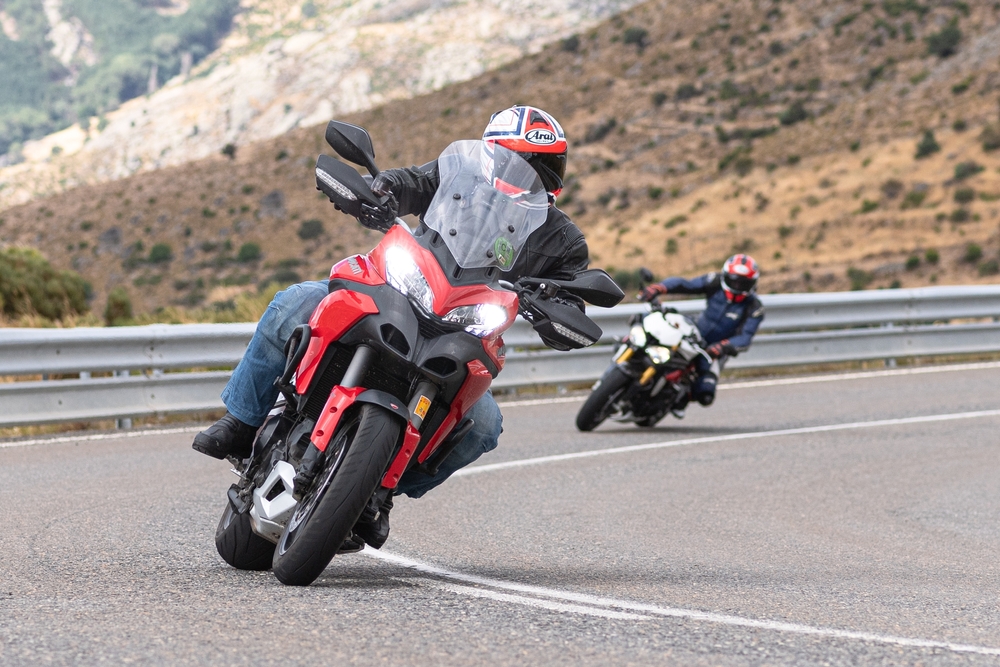
Left-turn crashes are not random bad luck. They follow a predictable pattern driven by human perception, road design, and driver habits. Understanding why they are so common is the first step toward proving fault in a left-turn crash.
- The "Size Arrival" Problem
A motorcycle presents a much narrower profile than a car or truck. Research into driver perception shows that the human brain tends to misjudge how far away a smaller object is and how quickly it is approaching. When a driver waiting to turn left scans oncoming traffic, they may register a motorcycle's single headlight as being farther away than it actually is. This miscalculation leads drivers to believe they have time to complete the turn when, in reality, the rider is only seconds away.
- Intersection Design and Sun Glare
Many intersections along busy corridors, from the commercial stretches of El Cajon Boulevard to the multi-lane crossings near Escondido's downtown area, create conditions that challenge visibility. A driver turning left must track traffic signals, oncoming vehicles, pedestrians in the crosswalk, and sometimes the glare of a setting sun, all at once. While these conditions are real, they do not relieve a driver of the duty to look carefully before turning.
- Distraction and Inattention
Checking a phone, adjusting a navigation screen, or simply daydreaming for a moment can cause a driver to miss an oncoming motorcycle entirely. A distracted driver who pulls into the intersection without fully scanning for traffic is not someone who "couldn't" see the motorcycle. They are someone who did not look.
Each of these factors helps explain why a car turned in front of a motorcycle in Escondido or anywhere else in the San Diego region. But an explanation is not an excuse, and California law makes that distinction clear.
What California Law Says About Left-Turn Accidents
California Vehicle Code Section 21801 sets the legal standard for left turns. Under this statute, a driver who intends to turn left must yield to all vehicles approaching from the opposite direction that are close enough to be a hazard at any point during the turning movement. The driver must continue yielding until the turn can be made with reasonable safety.
The law does not say "yield to vehicles you happen to notice." It says yield to vehicles that are close enough to create a hazard. That distinction matters enormously in left-turn motorcycle accident cases in California. A motorcycle approaching at the speed limit through a green light is close enough to create a hazard, whether or not the driver claims to have seen it.
Negligence Per Se: When a Traffic Violation Creates a Presumption of Fault
Under California Evidence Code Section 669, when a driver violates a statute designed to protect people from a specific type of harm, and that violation causes exactly that type of harm, the driver is presumed negligent. This legal principle is called negligence per se.
In a left-turn motorcycle crash, this works in a straightforward way:
- Vehicle Code Section 21801 (mentioned above) exists to prevent collisions caused by unsafe left turns.
- The motorcyclist is part of the group the law is designed to protect, meaning other road users.
- The crash is exactly the type of harm the statute was written to prevent.
When these elements come together, the burden can shift. Rather than the injured rider having to prove the driver was careless, the driver must explain why they should not be considered at fault. This is a meaningful advantage in failure-to-yield cases.
Dismantling the "I Didn't See Him" Defense
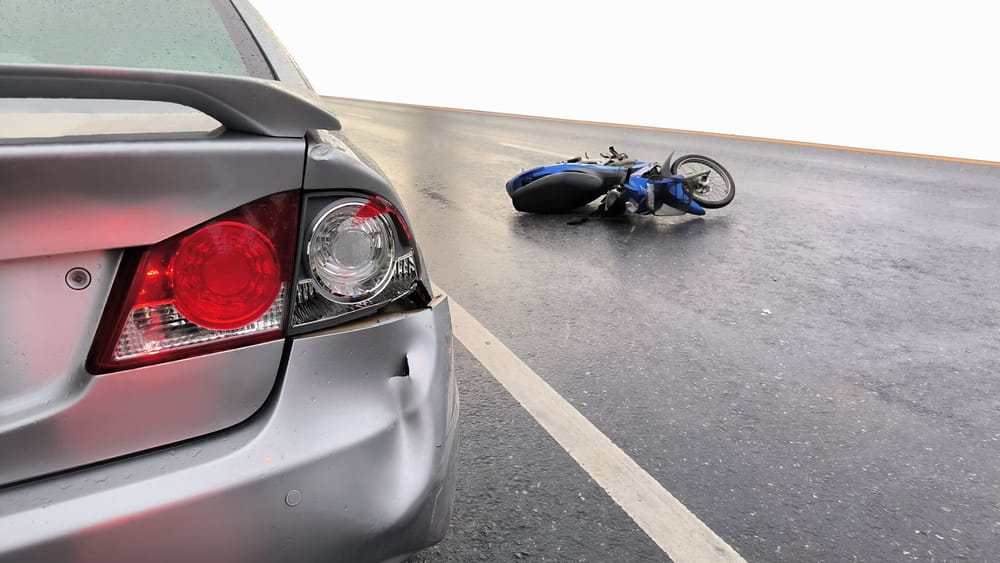
The phrase "I didn't see the motorcycle" shows up in police reports and insurance statements with alarming frequency. Drivers and their insurance companies use it to suggest the crash was unavoidable or that the rider was somehow hidden from view. However, a thorough legal investigation can break this defense apart piece by piece.
Driver Depositions
A deposition is a formal, sworn interview taken before trial. During a deposition, an attorney can ask the driver detailed questions under oath:
- Where exactly were you looking before you turned?
- How long did you wait before starting the turn?
- Did you check your mirrors? Did you look to your left?
- Were you using a phone, eating, or adjusting anything at the time?
- What was blocking your view, if anything?
Many drivers struggle to answer these questions convincingly. If a driver cannot point to a specific obstruction and instead admits they simply did not look carefully, the "I didn't see him" defense collapses. The deposition creates a record that an attorney can use at trial or during settlement negotiations.
Vision and Line-of-Sight Analysis
An attorney can retain a vision or human factors specialist to examine the intersection where the crash occurred. This type of analysis considers the driver's seated eye height in their vehicle, the angle of approach for both the car and the motorcycle, and any objects, vehicles, or structures that could have obstructed the view.
In many left-turn motorcycle accident cases in California, this analysis reveals that the driver had a clear, unobstructed line of sight to the approaching motorcycle for several seconds before the turn. When a specialist can testify that a normally attentive driver would have seen the rider, the claim that the motorcycle was invisible falls apart.
Accident Reconstruction and Speed Analysis
Accident reconstruction specialists use physical evidence from the scene, including skid marks, gouge marks, debris patterns, and final vehicle positions, to determine how the crash unfolded. They can calculate the speed of both the motorcycle and the turning vehicle and establish a timeline of events measured in seconds.
This kind of analysis is especially powerful when proving fault in a left-turn crash because it can show:
- The motorcycle was traveling at or near the posted speed limit.
- The motorcycle was visible for a specific number of seconds before impact.
- The driver had adequate time and distance to see the rider and stop or wait.
When the data shows a rider was visible for five, six, or even ten seconds before the collision, the argument that the driver "couldn't" see the motorcycle loses all credibility.
Together, these three tools, depositions, vision analysis, and accident reconstruction, form a powerful combination that can overcome the most common defense in left-turn motorcycle cases.
How California's Comparative Negligence System Affects Your Claim
California follows a pure comparative negligence system. This means that even if the rider was partially at fault, they can still recover compensation. The total amount is reduced by the rider's percentage of responsibility.
For example, if a jury determines that the rider's injuries are worth $200,000 and the rider was 15% at fault for traveling slightly above the speed limit, the rider would still recover $170,000. The other driver's failure to yield, causing a motorcycle accident, remains the primary cause of the crash, and the rider's partial fault does not erase the driver's liability.
Insurance companies sometimes try to inflate the rider's share of fault to reduce what they have to pay. They may argue the rider was speeding, not wearing high-visibility gear, or failed to brake in time.
A strong legal team will counter these arguments with the same evidence described above: speed analysis, scene data, and a clear demonstration that the driver's violation of Vehicle Code 21801 was the primary cause of the collision.
Steps to Protect Your Claim After a Left-Turn Motorcycle Crash
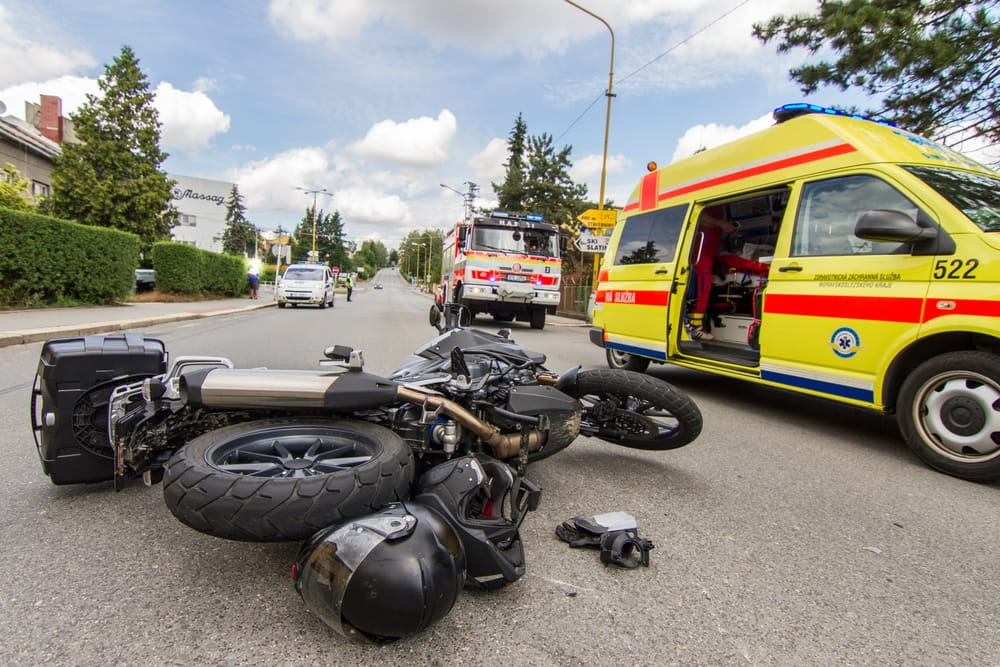
Once you are home and safe after a motorcycle accident, there are several steps that can help strengthen your case:
- Follow through on all medical treatment. Keep every appointment and follow your doctor's recommendations. Gaps in treatment give insurance companies a reason to question the severity of your injuries.
- Preserve your gear and your motorcycle. Do not repair or dispose of your helmet, jacket, or bike until they have been documented and potentially inspected by an investigator.
- Gather your own records. Save copies of the police report, photos from the scene, contact information for any witnesses, and all medical records and bills.
- Avoid giving recorded statements to the other driver's insurance company. Anything you say can be taken out of context and used to reduce your claim.
- Contact a personal injury attorney early. Physical evidence at the scene can fade quickly. Surveillance video from nearby businesses may be overwritten within days or weeks. Early legal involvement helps preserve the evidence that matters most.
Taking these steps early on gives your legal team the strongest possible foundation to work with. Time-sensitive evidence can disappear, so acting promptly is important.
FAQs for Left Turn Motorcycle Accident in California
Here are some of the most common questions riders and their families have after a left-turn collision.
A car made a left turn in front of me at an intersection. How do I prove it was their fault?
Proving fault starts with California Vehicle Code Section 21801, which requires the turning driver to yield. From there, evidence such as the police report, witness statements, intersection surveillance video, and accident reconstruction analysis can all demonstrate that the driver failed to yield when it was their legal duty to do so. A deposition of the driver can also reveal that they were not paying attention or did not look before turning.
What if the driver says they checked for traffic but still didn't see me?
Claiming to have looked is not the same as proving there was a legitimate obstruction. A vision specialist can analyze the intersection to determine whether the driver had a clear line of sight. If the analysis shows an unobstructed view, the driver's claim falls apart. The legal standard is based on what a reasonably careful driver would have seen, not just what this particular driver says they saw.
Can I still recover compensation if I was going a few miles over the speed limit?
Yes. California uses a pure comparative negligence system, meaning your compensation may be reduced by your share of fault but is not eliminated. Even if you were slightly above the limit, the turning driver still had a duty to yield to your approaching motorcycle. A few miles per hour above the limit rarely changes the outcome of a left-turn case significantly.
How long do I have to file a claim after a left-turn motorcycle accident in California?
In most personal injury cases in California, the statute of limitations is two years from the date of the accident. If a government entity is involved, such as a city or county vehicle, the deadline to file an administrative claim is typically much shorter, often just six months. Speaking with an attorney soon after the crash helps make sure no deadlines are missed.
What types of compensation can I pursue after a left-turn motorcycle crash?
Depending on the circumstances, you may be able to seek compensation for medical bills, future medical treatment, lost wages, reduced earning capacity, pain and suffering, and property damage to your motorcycle and riding gear. In cases involving particularly reckless conduct, additional damages may be available.
Does wearing dark clothing or not having extra reflective gear hurt my case?
California law does not require motorcyclists to wear specific colors or reflective clothing. While an insurance company may try to argue that a rider was harder to see, this argument rarely holds up when evidence shows the driver had a clear view and enough time to see the motorcycle regardless of the rider's clothing.
Talk to the Legal Team at Rawlins Law Accident & Injury Attorneys About Your Motorcycle Accident Case
If a driver turned left in front of you and you are dealing with injuries, medical bills, and an insurance company that is not on your side, you deserve someone who will fight for your recovery. Car Crash Ash and the team at Rawlins Law Accident & Injury Attorneys are committed to standing up for motorcycle riders throughout San Diego and across California.
Call today for a free case evaluation. There are no upfront fees, and you pay nothing unless your case is won. Let Rawlins Law Accident & Injury Attorneys handle the legal fight while you focus on healing.

Ashley Rae Rawlins
Founder and CEO - Rawlins Law Accident & Injury Attorneys
Personal Injury Attorney
Author's Bio